Trying to choose between a condo and a townhome in Juno Beach? You are not alone. In a coastal town with a strong mix of attached housing, the right fit often comes down to how you want to spend your time, how much maintenance you want to handle, and how closely you want to review association rules and costs. This guide will help you compare both options in a practical, local way so you can make a confident decision. Let’s dive in.
Why this choice matters in Juno Beach
Juno Beach is a small seaside community with 2.4 miles of beaches, 11 dune walkovers, and more than 3,000 residential units, according to the Town of Juno Beach community information. The town also notes that the population nearly triples during winter, which helps explain why many buyers are drawn to homes that are easier to lock up and leave behind.
That local housing mix is not theoretical. Town reporting shows that Juno Beach includes condominiums, townhouses, and single-family homes, with additional attached-housing and multifamily projects in the pipeline, including The Dunes at Juno Beach and Caretta. If you are comparing condos and townhomes here, you are looking at two property types that both play a real role in the local market.
What a condo means in Florida
In Florida, a condominium is a form of ownership where you own your individual unit and also share an undivided interest in the common elements, as defined in Florida Statute 718.103. Common elements are generally the parts of the property not included inside the unit.
That matters because the association is typically responsible for maintaining those shared areas, though some duties can be assigned differently in the governing documents. Florida law also helps clarify the insurance split, with the association covering association property and required common elements, while unit owners are generally responsible for personal property and many interior items.
In everyday terms, condo living often means less hands-on exterior maintenance for you. It can also mean more reliance on association budgets, reserves, rules, and possible assessments.
What a townhome means in Florida
Florida defines a townhouse as a single-family dwelling, no more than three stories, built in a row or group of attached units with property lines separating them, under Florida Statute 481.203. Each townhouse is treated as a separate building under that definition.
For you as a buyer, that often translates to a more house-like ownership feel. You may have a private entrance, more separation from shared interior spaces, and sometimes more storage or parking flexibility.
Still, the label alone does not tell the whole story. Under Florida HOA record and financial requirements, the association’s declaration, bylaws, insurance, maintenance obligations, and financial records are what really tell you who handles roofs, exterior paint, landscaping, gates, roads, and other shared items.
Condo vs. townhome at a glance
| Factor | Condo | Townhome |
|---|---|---|
| Ownership structure | Unit ownership plus shared common elements | Separate attached dwelling with property lines between units |
| Maintenance style | Often less exterior responsibility for owners | Often more owner responsibility, but varies by HOA |
| Lifestyle feel | More amenity-centered and shared-space oriented | More private, house-like entry and layout |
| Association role | Usually broader | Can range from limited to extensive |
| Best fit for | Buyers wanting easier lock-and-leave living | Buyers wanting a balance of low-maintenance living and a home-like feel |
Why condos appeal in Juno Beach
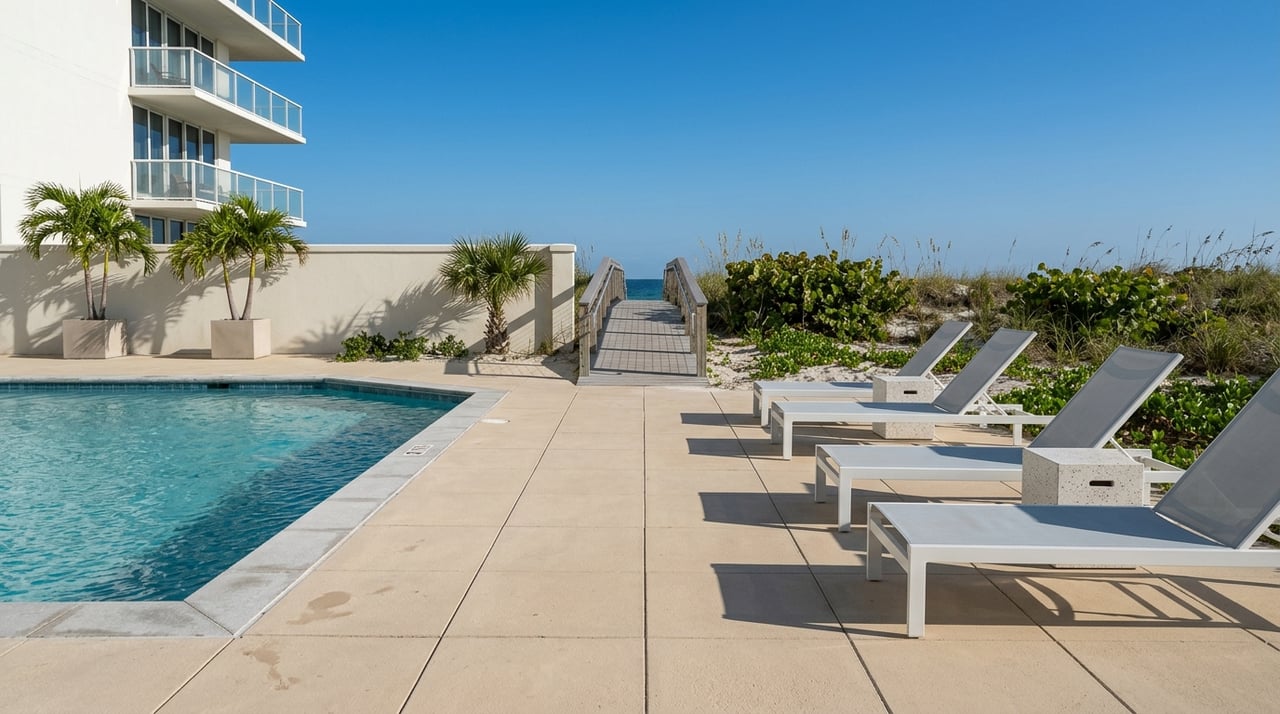
If your goal is simple, low-hassle coastal living, a condo may be the clearest fit. Florida condominium law describes common elements such as hallways, elevators, clubhouses, and pools in a way that supports the amenity-centered lifestyle many buyers picture when they think of beach-area condo living, as outlined in Florida Statute 718.108.
That can work especially well in Juno Beach, where the town’s seasonal population patterns and beach-oriented setting make convenience a real advantage. The town’s planning framework also notes the role of private recreational opportunities provided by condominiums and similar private uses in complementing public recreation, according to the Juno Beach comprehensive plan.
If you are a seasonal resident, relocator, or buyer who wants a place near the beach without taking on much exterior upkeep, that setup can be very appealing.
Why townhomes appeal in Juno Beach
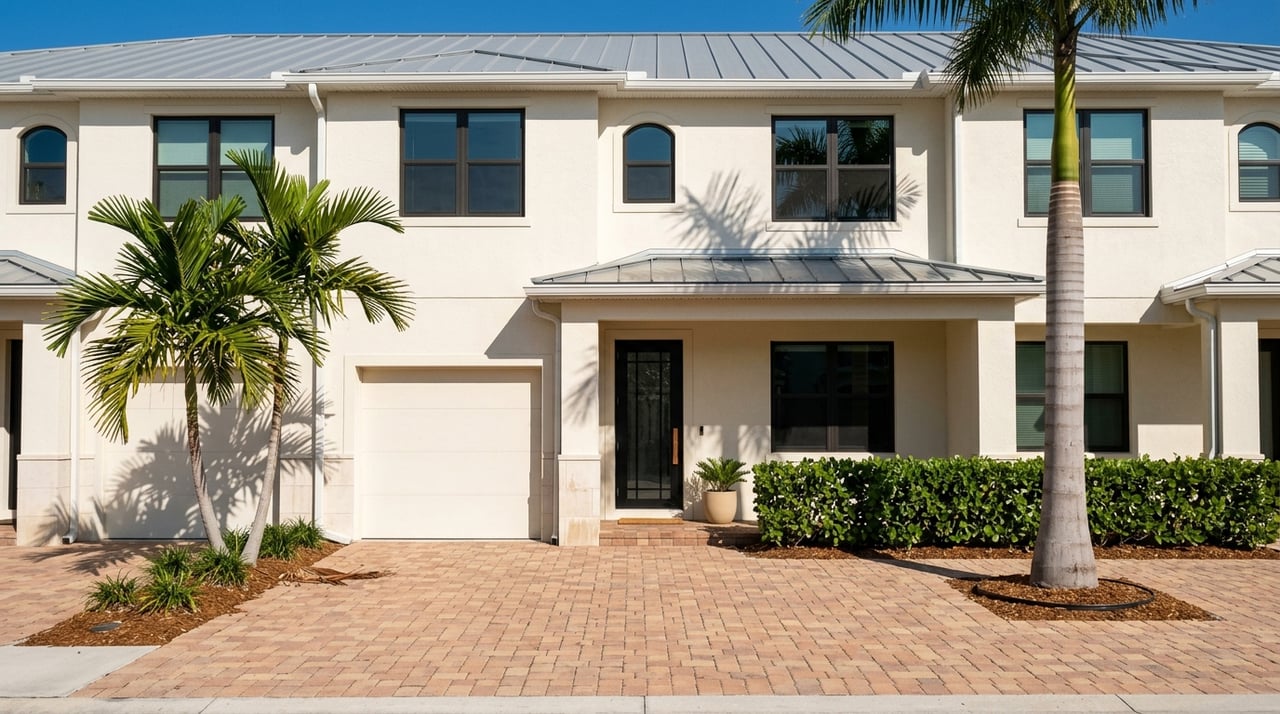
Townhomes can be a strong middle ground if you want attached living but prefer a more residential feel. Because each townhouse is considered a separate building under Florida’s definition, many buyers see them as closer to a single-family home than a condo in day-to-day living.
In Juno Beach, that can matter if you want a private entrance, easier loading in and out, or potentially more practical storage and parking. The town highlights its public beach access, dune walkovers, and connected bike and sidewalk system, while also noting beach and pier area parking in its planning materials, which makes access and mobility part of the ownership experience here.
Parking rules deserve special attention. Juno Beach code compliance specifically identifies improper recreational vehicle parking as a common issue, so if you have multiple vehicles or special parking needs, review the community rules closely before you buy.
Key questions to ask yourself
Before you choose a condo or townhome in Juno Beach, ask yourself these questions:
- How often will you be here? If this is a seasonal home, easier lock-and-leave living may matter more.
- How much maintenance do you want to manage? Some buyers want fewer chores. Others are comfortable handling more directly.
- How important is privacy? A townhome may feel more private, while a condo may involve more shared spaces.
- Do amenities matter to you? Condos often lean more heavily into shared amenities.
- What are your parking needs? Cars, guest parking, bikes, and recreational vehicles can all affect the right fit.
- How comfortable are you with association oversight? Both property types may have associations, but the scope can vary a lot.
Review the documents, not just the listing
This is one of the most important parts of the decision. A property may be marketed as a condo or townhome, but what really matters is what the governing documents say.
For condos, review the declaration, budget, reserve funding, insurance details, and any history of special assessments. For townhomes, review the HOA documents to confirm exactly who is responsible for exterior surfaces, roofs, landscaping, roads, shared drainage, gates, and amenities.
The association’s official records can include plans, permits, warranties, insurance policies, contracts, and financial records under Florida Statute 720.303. Those records help you move from assumptions to facts.
Condo due diligence matters more than ever
If you are considering a condo in Juno Beach, pay very close attention to reserves, building age, inspection status, and future repair planning. The Florida Department of Business and Professional Regulation explains that certain residential condominium buildings that are three or more habitable stories must complete milestone inspections at specific ages, and qualifying condo associations must also complete Structural Integrity Reserve Studies at least every 10 years.
That same DBPR guidance notes that if reserve funding is not enough for major structural items, associations may need to use special assessments, loans, or lines of credit. In a coastal setting, this is not a side issue. It should be a central part of your buying decision.
How to decide which is your fit
A condo may be your better fit if you want:
- A stronger lock-and-leave setup
- Less direct exterior maintenance
- Shared amenities and common spaces
- A seasonal or part-time residence near the beach
A townhome may be your better fit if you want:
- A more house-like ownership feel
- A private entrance and less shared interior circulation
- Potentially more flexibility for storage or parking
- A balance between attached living and day-to-day independence
The right answer is personal. In Juno Beach, both options can make sense. The smartest move is to match the property type to your actual lifestyle, not just the photos or the marketing language.
If you are weighing condos and townhomes in Juno Beach, working with a local team can help you compare not just floor plans, but also documents, maintenance obligations, and the day-to-day realities of each community. When you are ready to talk through your options, connect with Casey Schilling for personalized guidance tailored to your goals.
FAQs
What is the main difference between a condo and a townhome in Juno Beach?
- A condo usually means you own the unit and share common elements with other owners, while a townhome is generally a separate attached dwelling with property lines between units.
Are condos in Juno Beach better for seasonal residents?
- Condos can be a strong fit for seasonal residents because they often offer a more lock-and-leave lifestyle with less direct exterior maintenance.
Do townhomes in Juno Beach always have lower association involvement than condos?
- No. Townhomes may feel more house-like, but the HOA’s actual responsibilities depend on the declaration, bylaws, and rules for that community.
What should condo buyers review before buying in Juno Beach?
- Review the association budget, reserves, insurance, inspection status, and any history of special assessments or planned major repairs.
Why do parking rules matter when buying a townhome or condo in Juno Beach?
- Parking rules can affect daily convenience and storage options, especially if you have multiple vehicles, bikes, or recreational vehicles.
Is Juno Beach a market where both condos and townhomes are common?
- Yes. Town reporting shows that Juno Beach includes condominiums, townhouses, and single-family homes, with additional attached-housing and multifamily projects in the pipeline.