Trying to choose between a downtown condo tower and a neighborhood street in West Palm Beach? That decision shapes more than your address. It affects your daily routine, your parking setup, your level of association involvement, and how much property upkeep lands on your shoulders. If you are weighing convenience against a more residential feel, this guide will help you compare both options with more clarity. Let’s dive in.
Downtown tower living in West Palm Beach
West Palm Beach offers a true downtown living option for buyers who want to be close to activity, transit, and shared amenities. The city’s Downtown/City Center Community Redevelopment Area spans about 940 acres and includes areas such as the Downtown Core, Okeechobee Corridor, Clearlake District, Historic Northwest, and Brelsford Park/Providencia Park, according to the City of West Palm Beach CRA.
The city also connects downtown redevelopment with destinations like CityPlace, while the Downtown Development Authority highlights Clematis Street and downtown attractions as key parts of the experience. For many buyers, that means your home base can sit within reach of dining, arts, shopping, and entertainment in a way that feels highly centralized.
What downtown convenience looks like
Downtown is the most transit-connected part of West Palm Beach. The Downtown Development Authority notes that the Brightline station at 510 Evernia Street is within walking distance of Clematis Street, the Kravis Center, and The Square.
You also have multiple local transportation options. The city says Ride WPB offers fixed-route and on-demand service, and the DDA provides a free Circuit shuttle within downtown and its service zone. If you want a more connected, lower-maintenance lifestyle, that kind of mobility can be a major advantage.
What condo towers often include
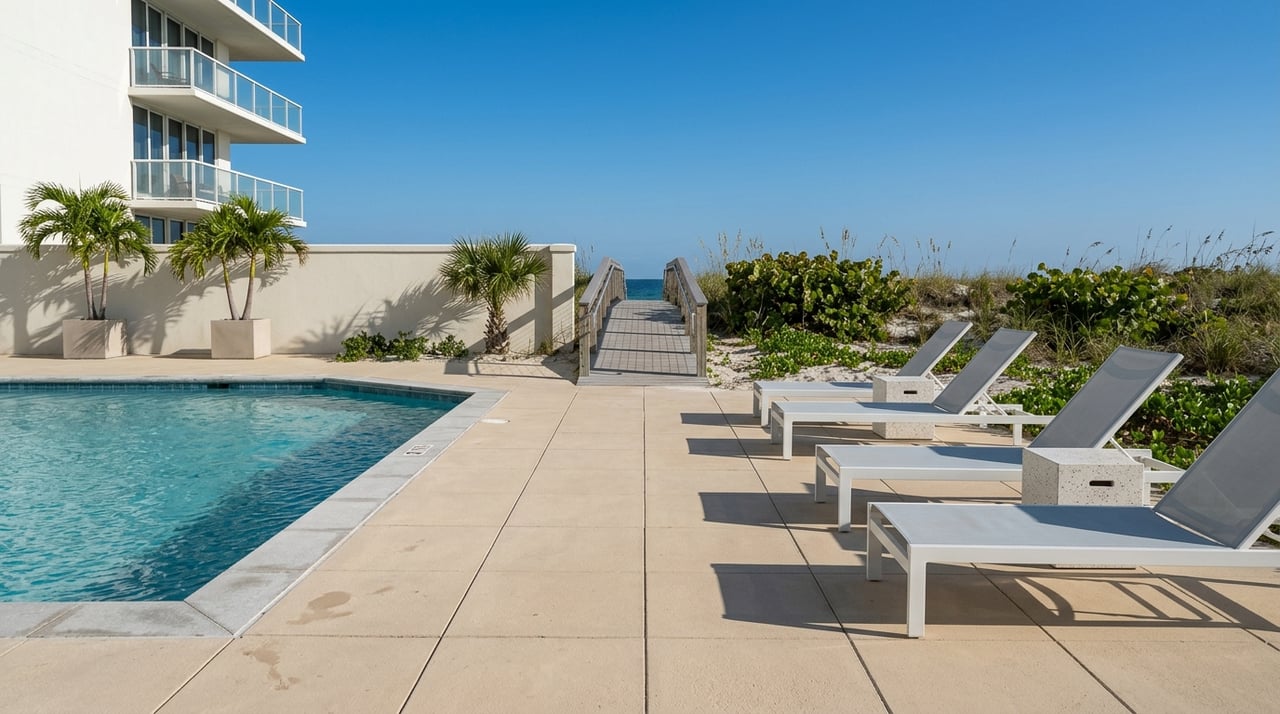
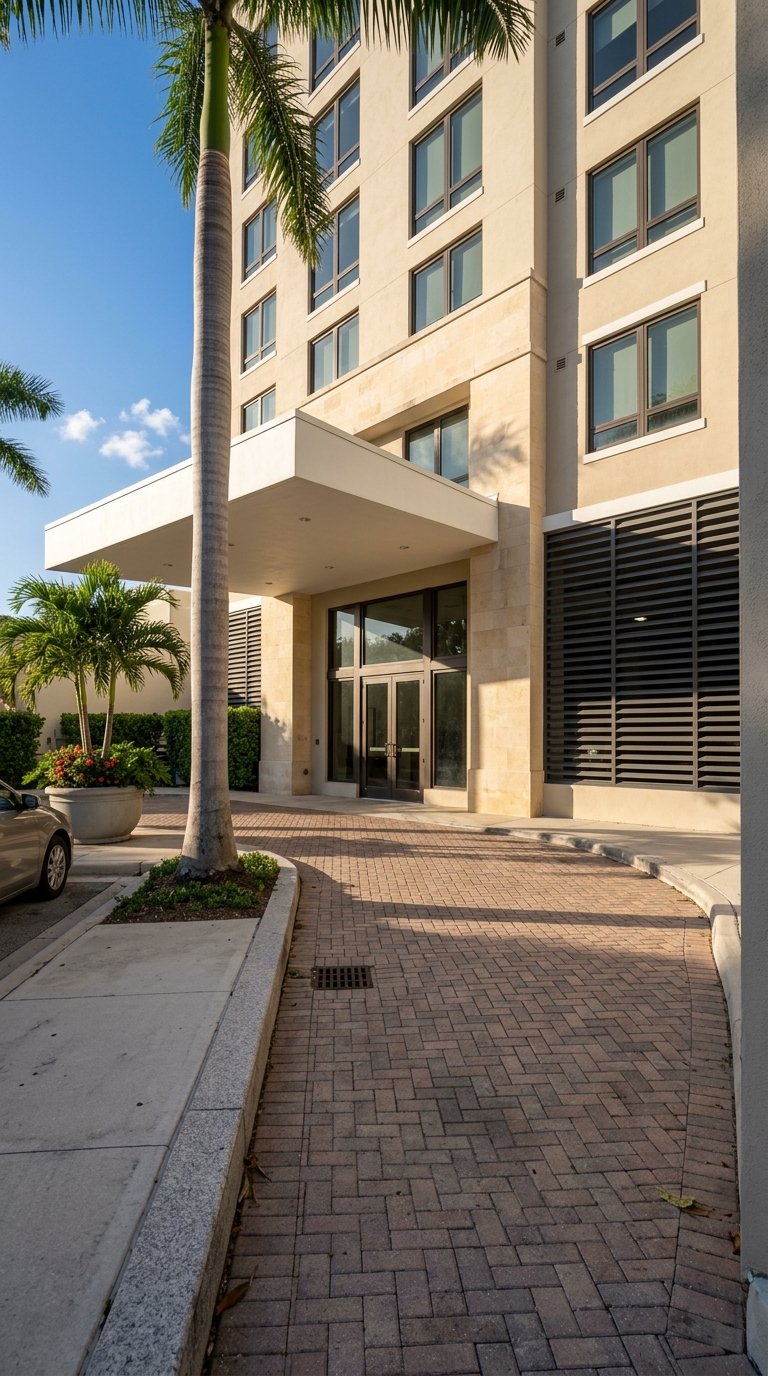
One of the biggest draws of a condo tower is the bundled lifestyle. A local example is 610 Clematis, an 8-story, 251-unit building listed by the DDA with amenities such as a pool deck, spa, and gym.
Not every building offers the same features, but many tower buyers expect some mix of shared amenities and managed common spaces. That can appeal to seasonal owners, relocators, and buyers who value convenience over handling every part of property upkeep themselves.
How condo ownership works
A downtown tower may feel simple on the surface, but the ownership structure matters. Under Florida condominium law, the condominium association has the power to maintain, manage, and operate the condominium property, collect assessments, and repair or replace common elements and association property.
In practical terms, this means more of the building’s day-to-day management runs through the association. Common elements are also legally defined as the parts of the property not included in the individual units, which helps explain why tower living often comes with a more organized, shared-management model.
Why this appeals to some buyers
If you want a lock-and-go style of ownership, a tower often fits that goal well. The combination of walkability, transit access, and association-managed common areas can make downtown condo living especially attractive for seasonal owners and buyers who split time between South Florida and another location.
That does not mean condo ownership is hands-off. It means the responsibilities are structured differently, with more decisions and expenses handled through the association rather than by each owner individually.
Neighborhood street living in West Palm Beach
If a condo tower feels too vertical or too centralized, a neighborhood street may be a better fit. On the neighborhood side of the market, West Palm Beach offers a more residential setting, and in some areas, a stronger historic identity.
The city’s Historic Preservation Program oversees 18 locally designated historic districts and 46 individually designated sites. The city also describes Historic Northwest as predominantly residential and historic, which helps show how different the feel can be compared with downtown tower living.
What the neighborhood option offers
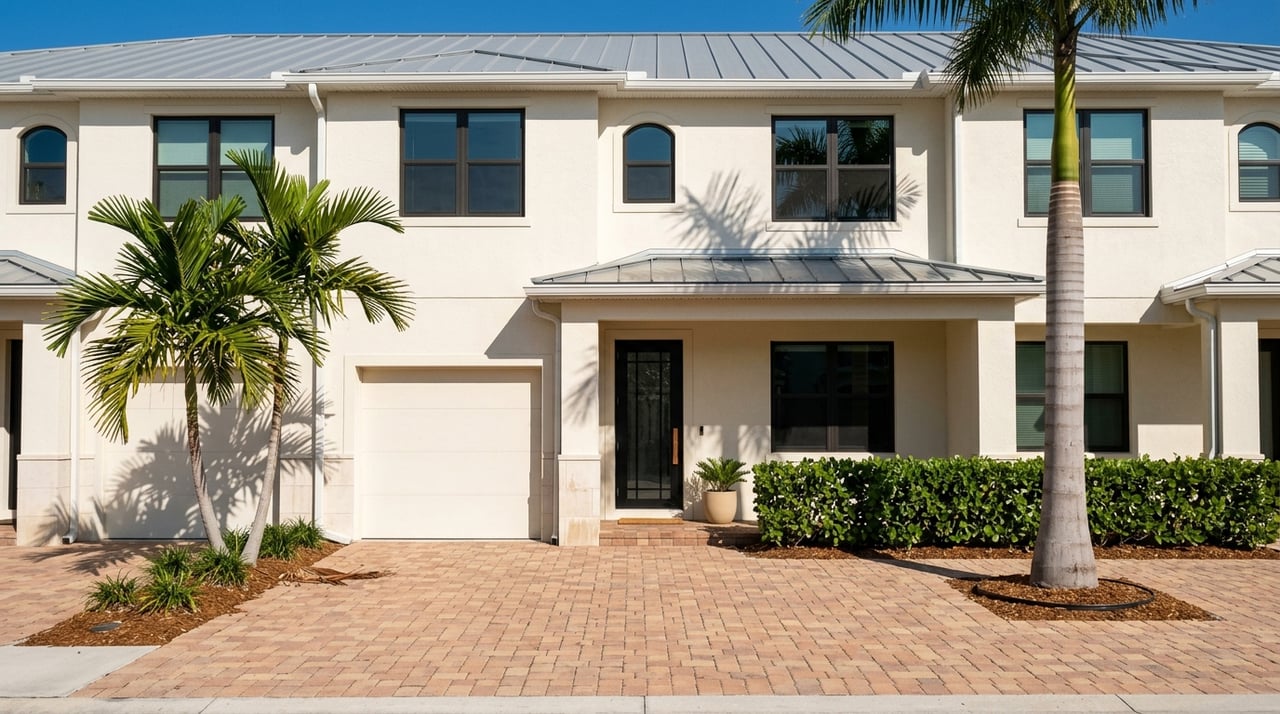
A neighborhood street or townhome community often gives you a more house-like setting. The pace can feel different, the surroundings can be more residential in character, and your day-to-day experience may center more on the immediate block or community than on a downtown district.
That said, buyers should not assume that a townhome automatically means fewer rules or less structure. Some communities still have mandatory membership, dues, and governing documents, even when the physical layout feels more like a traditional home.
How HOA and townhome ownership differ
Under Florida HOA law, a homeowners’ association is a Florida corporation for a community where membership is mandatory and assessments can become liens. The governing documents include the recorded declaration of covenants, along with the association’s articles and bylaws.
That means a townhome or neighborhood community can still involve budgets, rules, records, and board governance. The legal framework is different from condo law, but it is still an association-governed form of ownership.
Why the legal structure matters
A townhome’s appearance does not tell you whether it is governed under condo law or HOA law. Florida Chapters 718 and 720 are separate statutory systems, so you need to review the declaration and bylaws before assuming how the property is structured.
This is one of the most important details to verify during your search. Two properties may look similar from the outside but come with very different financial obligations, maintenance responsibilities, and document packages.
Parking feels different in each setting
Parking is one of the clearest differences between a condo tower and a neighborhood street. Downtown often relies on garages, lots, metered spaces, and permit systems, while some neighborhood areas use residential permit controls.
The city’s parking permit information shows monthly residential garage permits at $80 plus tax, general garage permits at $100 plus tax, and off-street lot permits at $50 plus tax. The city also notes that on-street permits have limited availability, and its residential permit list includes Grandview Heights streets.
What buyers should ask about parking
Before you buy, it helps to ask practical questions like:
- Is parking assigned, deeded, leased, or permit-based?
- Are guest parking rules limited or flexible?
- Does the community rely on street parking, a garage, or both?
- Are there neighborhood permit restrictions that affect daily use?
A parking setup that feels easy to one buyer may feel frustrating to another. If parking certainty matters to you, it should be part of your decision early, not something you sort out after contract.
Condo rules matter more than ever
If you are leaning toward a condo tower, Florida’s current condo requirements deserve close attention. Under Florida Statute 718.112, a residential condominium association must complete a structural integrity reserve study at least every 10 years for each building on the condominium property that is three habitable stories or higher.
The study must cover items such as the roof, structural systems, fireproofing and fire protection systems, plumbing, electrical systems, waterproofing and exterior painting, and windows and exterior doors. The Florida Department of Business and Professional Regulation describes a SIRS as a budget-planning tool for future major repairs and replacements.
Why reserve funding matters
Reserve funding rules are also stricter now for affected condominiums. For budgets adopted on or after December 31, 2024, an association that must obtain a SIRS generally may not vote to fund less than the required reserves for those covered items, except in limited circumstances.
The statute also allows reserve needs to be funded through regular assessments, special assessments, lines of credit, or loans. In plain terms, buyers should pay attention to both monthly costs and the association’s financial planning, because future building needs can affect ownership costs.
What to review before buying a condo
Condo sale disclosures are now more detailed as well. Under Florida Statute 718.503, contracts entered into after December 31, 2024 must disclose whether the association has completed a milestone inspection, turnover inspection report, or SIRS, if applicable, and buyers must receive the current milestone summary and most recent SIRS when required.
This is one reason condo due diligence should be thorough. A tower may offer convenience and amenities, but you also want a clear picture of reserves, inspection status, and any risk of future special assessments.
A simple comparison
| Factor | Downtown Condo Tower | Neighborhood Street or Townhome |
|---|---|---|
| Setting | Centralized, urban, amenity-driven | More residential, often lower-rise |
| Transit access | Strong downtown connectivity | More location-specific |
| Management style | Building-level association oversight | HOA or other community governance may apply |
| Maintenance structure | More shared through condo association | Varies by property and governing documents |
| Parking | Often garages, permits, meters, or lots | May include driveways, garages, or permit rules |
| Key caution | Reserves, SIRS, inspections, special assessments | Verify whether condo or HOA law applies |
Which option fits your lifestyle?
A downtown tower often makes sense if you want shared amenities, easier access to downtown destinations, and a home that supports a seasonal or lock-and-leave routine. It can be a strong fit for buyers who value convenience, mobility, and centralized management.
A neighborhood street or townhome community often fits better if you want a more residential setting and a day-to-day feel that is less tied to a vertical building environment. It may also appeal to buyers who want a home-like layout, while still understanding that association rules can still apply.
The right answer usually comes down to your priorities. If you know how you want to live, how much association involvement you are comfortable with, and how important parking and maintenance structure are to you, the choice becomes much clearer.
If you are comparing condos, townhomes, or residential streets in West Palm Beach, working with a local team can help you narrow the field faster and spot the details that matter before you commit. When you are ready to talk through your options, connect with Casey Schilling for tailored guidance on West Palm Beach homes and condos.
FAQs
Which West Palm Beach option is better for a seasonal buyer?
- A downtown condo tower often fits seasonal buyers better because downtown offers walkability, transit access, and more association-managed common elements.
What should buyers review before buying a West Palm Beach condo tower?
- You should review the association’s budget, reserve funding, structural integrity reserve study status, milestone inspection information if applicable, and the possibility of special assessments.
Are West Palm Beach townhomes always governed by HOA rules instead of condo rules?
- No. A townhome can be governed under condo law or HOA law, so you should verify the declaration, bylaws, and ownership structure rather than assume based on appearance.
How does parking differ between downtown West Palm Beach and neighborhood streets?
- Downtown often uses garages, lots, metered spaces, and permits, while some neighborhood areas may have residential permit parking rules or a more property-specific parking setup.
Does a neighborhood street in West Palm Beach mean fewer association obligations?
- Not necessarily. Many neighborhood and townhome communities still have mandatory membership, dues, recorded covenants, and board governance under Florida HOA law.